Performance Marketing + AI
AI Marketing Ads Agent
Evolved a manual Meta Ads review process into an AI-assisted operating layer for campaign monitoring, anomaly detection, paid-lead attribution, competitor intelligence, creative diagnosis, and guarded optimization recommendations.
The problem was not getting more campaign data. It was knowing what deserved attention.
Daily paid media work involved repeated checking across spend, delivery, CTR, CPM, CPL, targeting, creative performance, and competitor activity. The harder part was turning those signals into a prioritized marketing decision without reacting to one metric in isolation.
Campaign, ad set, and creative checks repeatedly consumed time before any strategic decision could happen.
CPL alone did not explain whether the resulting inquiries became engaged, qualified, high-intent, or commercially useful.
CTR decline, frequency, CPM, spend, delivery, and lead quality need to be read together before calling a creative tired.
Internal performance and external market signals were reviewed separately, making it harder to turn both into the next creative test.
Monitor broadly. Diagnose carefully. Execute only inside a safe boundary.
The current system combines the earlier Campaign Intelligence layer, a newer Meta Marketing API monitoring workflow, and a paid-lead attribution foundation. The current attribution implementation focuses on Meta Click-to-WhatsApp so an ad touch can be linked to the CRM lead and later evaluated against qualification and sales outcomes. Live campaign writes remain behind human approval.
Built around marketing decisions, not dashboard volume.
The system reads current Meta performance and compares it with recent context instead of relying on isolated screenshots or manual exports.
Signals such as CTR, CPM, frequency, spend, delivery, and CPL are evaluated together before recommending a response.
The Phase 11 attribution layer captures paid Meta referral context, stores the ad touch, links it to the CRM lead, and creates the foundation for comparing campaign or creative cost with qualified-lead quality.
Scheduled Meta Ads Library research tracks recurring hooks, CTAs, formats, positioning changes, ad longevity, and possible market gaps.
Performance and competitor signals can be translated into a clearer brief for the next creative test rather than a generic request for new ads.
The AI can recommend actions, but budget changes and other high-impact live actions remain under human control during the current phase.
A decision-support layer that is becoming closer to the real campaign workflow.
This case shows workflow maturity, not a claimed ROAS lift. Current proof is operational analysis, reporting, competitor monitoring, and the newer Phase 1 monitoring layer.
Less scattered activity. More operating clarity.
Repeated manual checks inside Ads Manager and exported reporting.
A structured monitoring layer brings campaign and creative signals into one review flow.
Performance changes were interpreted manually metric by metric.
The system checks multiple signals and produces a prioritized diagnosis with supporting evidence.
Raw CPL could dominate the optimization conversation.
The operating model increasingly compares paid-media cost with qualification and downstream CRM quality.
A WhatsApp lead could arrive without a reliable link back to the paid ad touch that created the conversation.
Meta Click-to-WhatsApp referral data can be captured and linked to the CRM lead as the foundation for CPQL and creative-quality analysis.
Competitor checks were ad hoc and separate from internal performance analysis.
Scheduled market monitoring feeds creative and positioning observations into the same decision cycle.
All decisions and execution were fully manual.
Recommendations are prepared by the system, while high-risk execution remains human-approved.
The system already produces reviewable marketing intelligence.
The attribution diagram shows the newer paid-lead layer, while the interactive reports show the campaign and competitor intelligence that already supports the operating process.
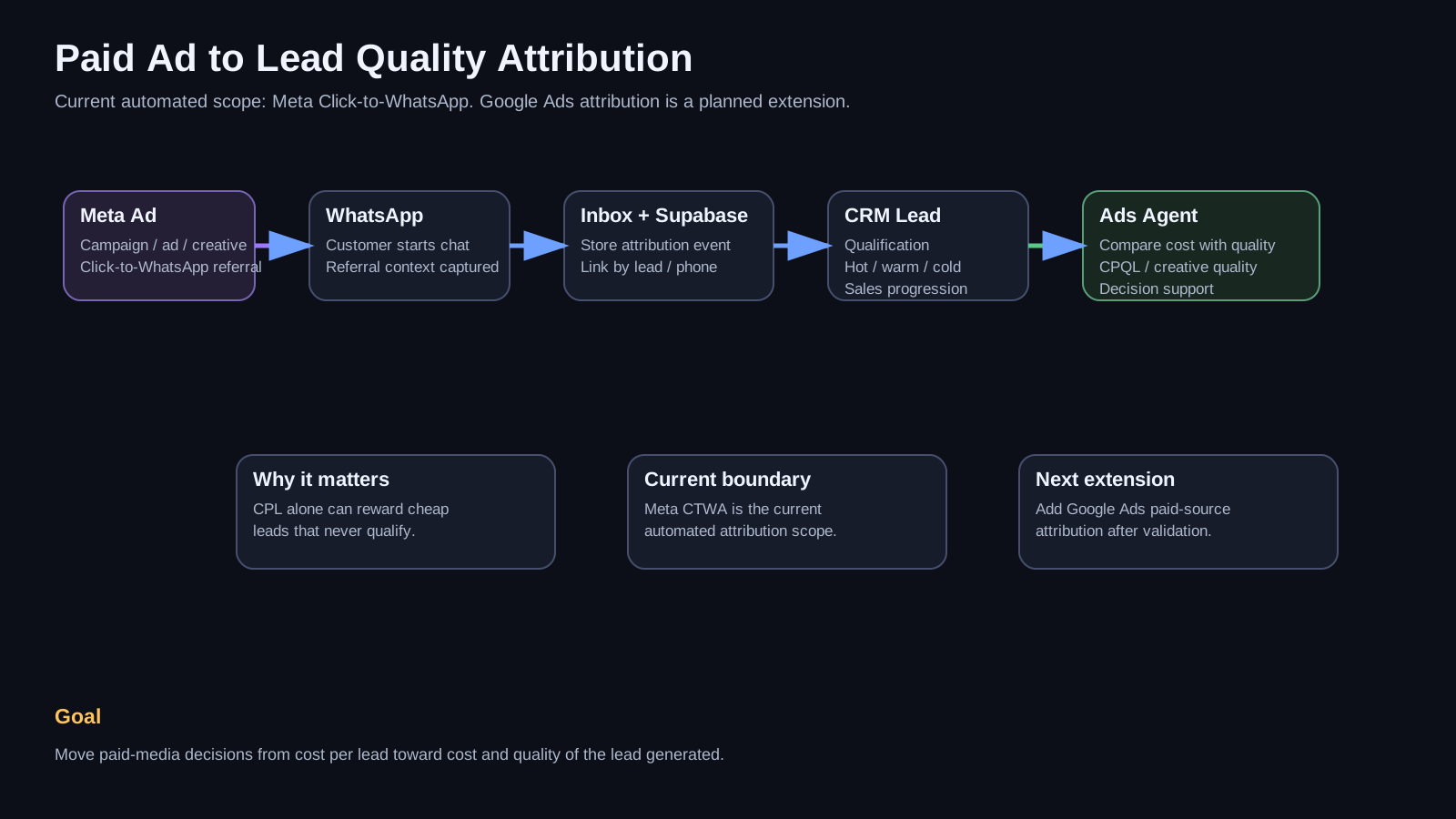
Current automated scope is Meta Click-to-WhatsApp. The same operating model can later extend to Google Ads after its attribution path is built and validated.
Phase 1: diagnosis before automation
- The earlier campaign-analysis and competitor-intelligence workflows are operational and used for structured review.
- A newer Meta Marketing API monitoring layer has been built to move collection and diagnosis closer to the live campaign workflow.
- Phase 11 adds a paid attribution foundation focused on Meta Click-to-WhatsApp, linking referral data and ad touch context to the CRM lead.
- The attribution layer is still under guarded rollout and production validation. It should not yet be presented as complete cross-channel attribution.
- Google Ads paid attribution is a logical next extension, but it is not part of the current automated implementation.
- The system remains recommendation-first and does not silently pause, scale, or rewrite live campaigns.
Close the loop carefully
- Complete the guarded production rollout and acceptance testing for real Meta Click-to-WhatsApp referrals.
- Lock the attribution model for paid traffic, including first-touch versus last-touch rules and how repeat ad clicks should be treated.
- Create a reliable lead + ad touch view so CPQL and creative-quality analysis can use qualified CRM outcomes.
- Extend the paid-source attribution model to Google Ads after the Meta path is stable and measurable.
- Connect proven recommendations to approval-based Meta actions only after the decision logic is trusted.
Key takeawayA useful ads agent should not stop at cheaper leads. It should connect paid-media signals to the quality of the lead that entered the business, then keep risky execution inside a clear approval boundary.
Start a conversation