Revenue Operations + AI
Lead Nurturing & Follow-Up Automation
Built a lifecycle follow-up system that keeps unfinished WhatsApp leads moving through a structured H+1, H+3, H+7, H+30, and H+60 cadence while allowing the bot and sales admin to share control.
A lead does not disappear just because the chat goes quiet.
The WhatsApp Sales Assistant could handle the active conversation, but high-consideration interior leads often need more time. Some stop replying after asking about price, scope, design, or timing. Without a structured follow-up system, those opportunities rely on someone remembering to message them again.
A lead could be qualified and still go quiet. Without a clear next date, the opportunity could disappear inside the inbox.
Some prospects need a follow-up tomorrow, while others need a longer reactivation cycle because renovation decisions can take weeks.
If the bot and a human both follow the same lead without shared ownership rules, the customer can receive duplicate or confusing messages.
Outside the WhatsApp service window, business-initiated follow-up must use an approved Meta template instead of an unrestricted free-form message.
Keep the lead moving, but make ownership explicit.
This system begins after the active sales conversation slows down. It schedules lifecycle follow-up, checks the latest lead state, decides whether the bot or admin owns the next action, sends or reminds at the right time, and stops or changes behavior when the lead responds or converts.
Built around the messy reality after the first conversation.
The current follow-up sequence supports H+1, H+3, H+7, H+30, and H+60 stages so short-term reminders and longer reactivation live in the same operating model.
Follow Up Owner can be assigned to the bot or to a human admin. Bot Status is a separate control, so scheduled follow-up ownership does not have to equal general chatbot availability.
When the WhatsApp service window is closed, business-initiated follow-up uses approved Meta message templates. Once the customer responds, normal active conversation can continue.
The operating interface supports actions such as recording a completed follow-up, reminding the admin tomorrow, marking that the lead responded, and marking the opportunity WON.
The sequence reacts to lead state. WON stops further nurture, while selected LOST leads can remain in the defined long-term nurture sequence through H+60.
Operational rules are designed so repeated clicks, reminders, bot actions, and manual admin actions do not accidentally count as multiple completed follow-ups.
Follow-up is now a managed lifecycle, not a memory task.
The current proof is operational workflow capability. No recovered-revenue rate, follow-up response lift, or conversion uplift is claimed without measured evidence.
Less scattered activity. More operating clarity.
A lead was followed up when someone remembered or manually reviewed the list.
The lead can enter a defined H+1, H+3, H+7, H+30, and H+60 lifecycle.
It was easy for bot and admin responsibilities to blur.
Follow Up Owner and Bot Status are separated so the next action has a clear operator.
Manual outreach depended on the admin knowing whether a free-form message was allowed.
The workflow distinguishes service-window behavior and approved-template follow-up.
A scheduled follow-up could remain pending even after the customer re-engaged.
Lead response changes the lifecycle and returns the conversation to the active Sales flow.
Reminders, completed actions, and outcomes lived across chat history and personal memory.
Inbox actions make follow-up state and next action visible to the team.
Repeated manual or automated actions could create inconsistent follow-up records.
Rules distinguish reminders, completed follow-ups, lead responses, and final outcome states.
The value is in the operating rules, not just the reminder.
These diagrams summarize the lifecycle and ownership logic behind the current follow-up system while keeping customer data private.
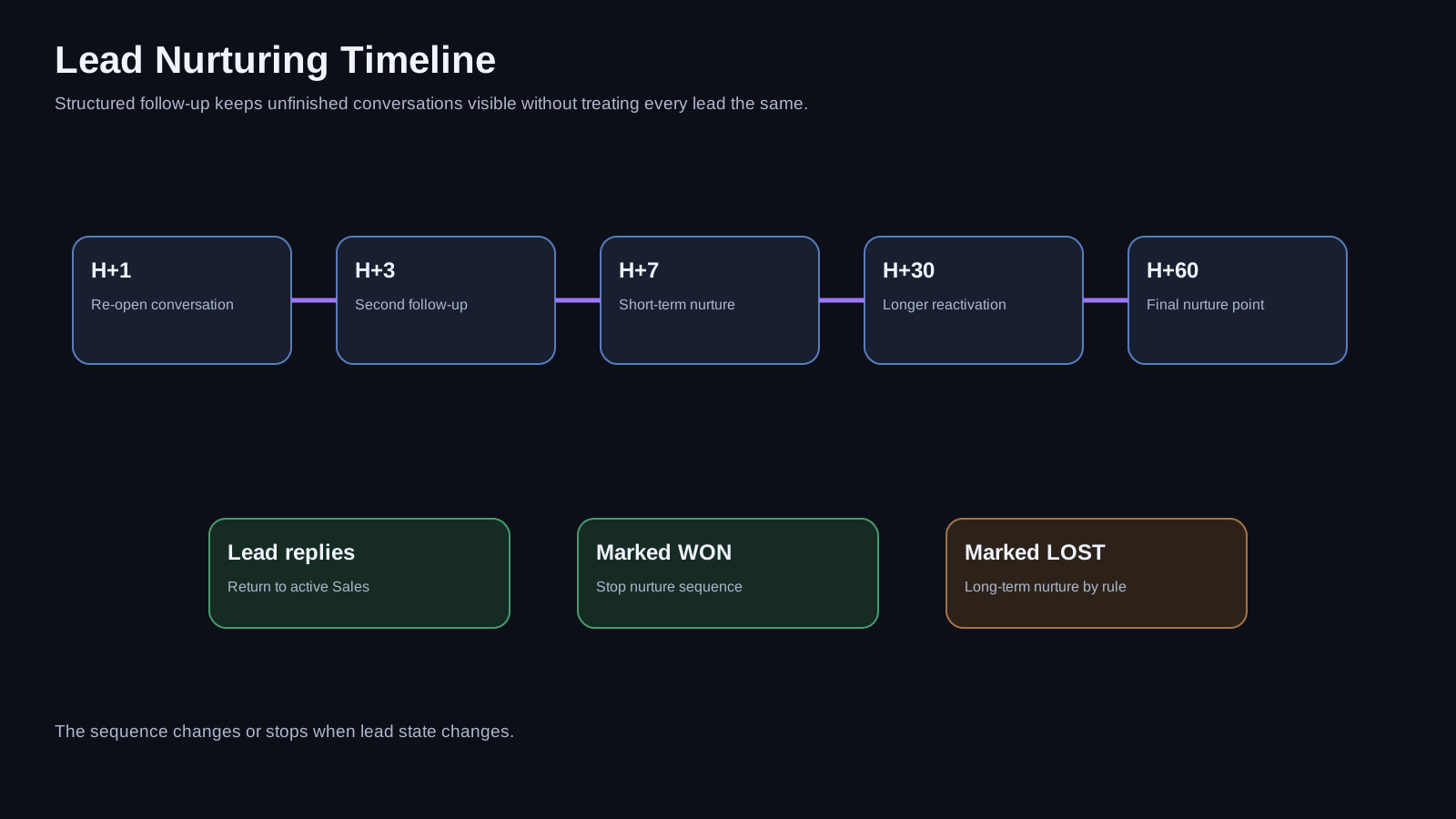
The same system handles immediate reminders and longer reactivation while changing behavior when the lead responds or reaches a final state.
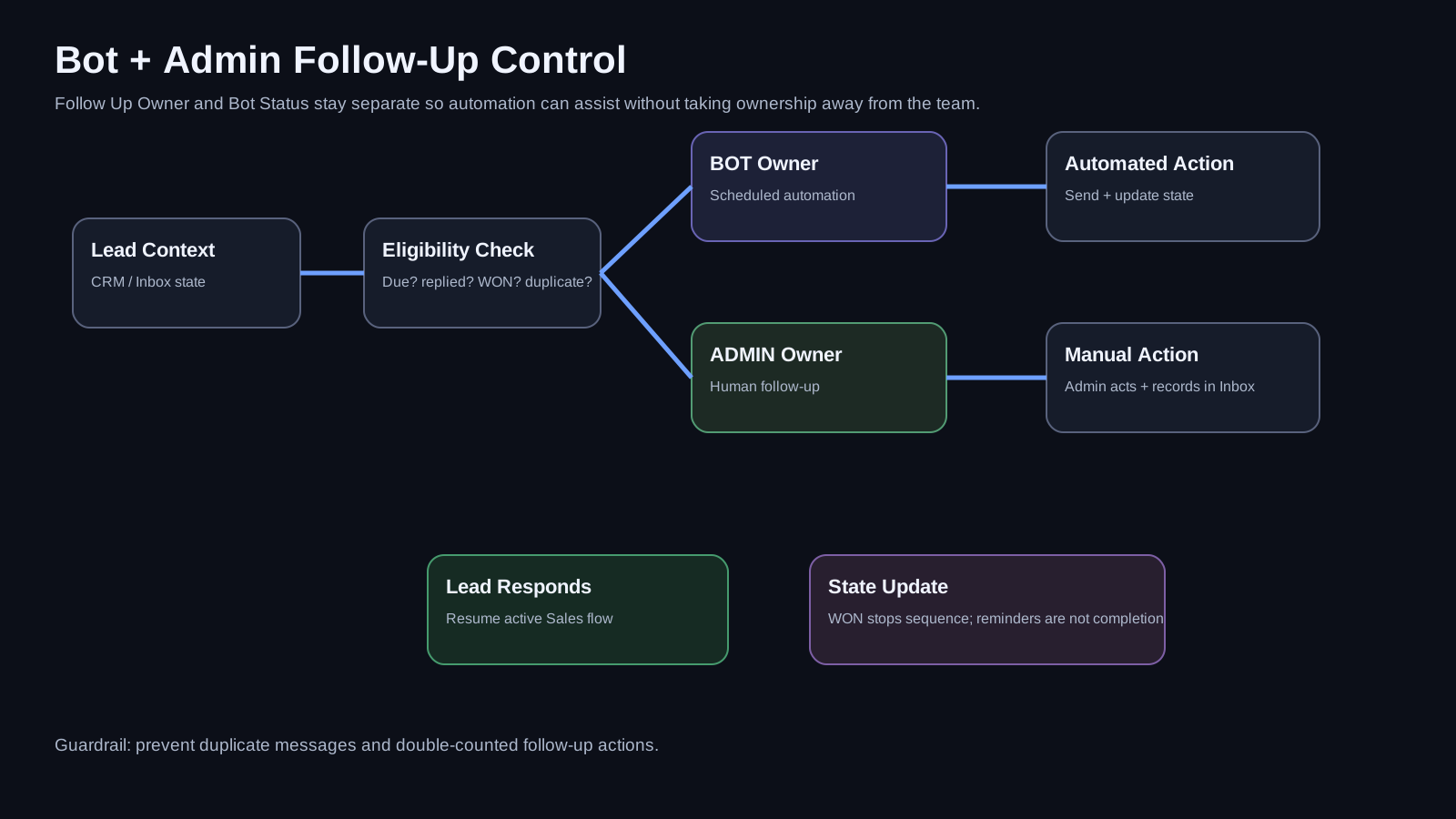
Automation and manual sales work share the same lifecycle without assuming that every lead should always be handled by the bot.
Operational follow-up layer
- The follow-up model uses a defined H+1, H+3, H+7, H+30, and H+60 cadence.
- Automated bot follow-up and manual admin follow-up both exist inside the operating model.
- Follow Up Owner and Bot Status are separate controls.
- The Inbox App supports operational actions for completed follow-up, reminders, lead response, and outcome changes such as WON.
- WhatsApp business-initiated messages outside the service window use approved Meta template logic.
- The system uses lead context and state from the CRM / Inbox stack instead of treating every follow-up as a generic broadcast.
Make nurture more adaptive without making it aggressive
- Use measured response patterns to refine cadence and message strategy instead of assuming every lead needs the same number of touches.
- Use richer attribution and CRM history to compare follow-up quality by lead source, campaign, segment, and lead quality.
- Allow the future Analysis Agent to identify where the nurture funnel is leaking or where leads repeatedly stall.
- Let a future Orchestrator coordinate exceptions and priorities without removing human control from sensitive sales decisions.
Key takeawayThe useful automation is not sending more messages. It is making sure the right lead gets the right next action, with a clear owner, without losing human control.
Start a conversation